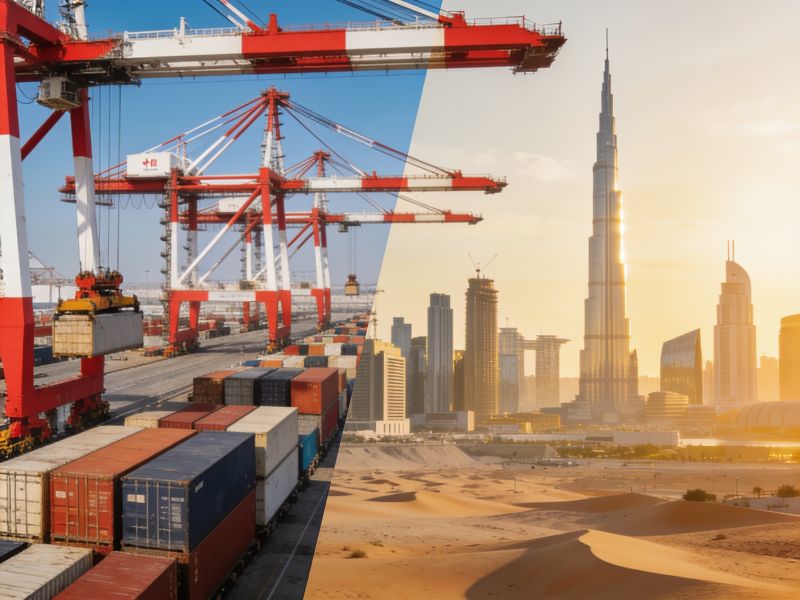
Walk through the Dubai South free zone and you'll see Chinese cranes unloading machinery from Shanghai while Emirati officials finalize a new visa-on-arrival deal for Chinese tourists. The China vs UAE relationship rarely fits a neat binary. On paper, they are strategic partners—the UAE joined the Belt and Road Initiative in 2018, and bilateral trade hit $95 billion in 2023. Yet scratch beneath the surface, and you find friction points that Western headlines miss.Consider the energy sector. Chinese state oil giants like CNPC hold stakes in Abu Dhabi's ADCO concession, but the UAE has simultaneously deepened ties with India and Japan to diversify buyers. When I spoke to a Dubai-based energy analyst last spring, she noted that Emirati officials privately worry about over-reliance on Chinese demand for petrochemicals. "They want Chinese capital。not Chinese leverage," she said. That tension plays out in quiet renegotiations of pricing formulas—details rarely reported but critical to understanding the China vs UAE dynamic.
Technology offers another window. Huawei built 5G networks across the Emirates, and Abu Dhabi's G42 signed a $1.5 billion deal with Chinese firm Sinopharm for vaccine production. But in 2022, the UAE paused a major Chinese port project in Khalifa Port after U.S. pressure. The lesson?The UAE hedges. It welcomes Chinese tech but keeps American security guarantees close. Chinese firms I've interviewed in Sharjah complain about opaque licensing rules and sudden regulatory shifts—frustrations mirrored by Emirati businessmen in Guangzhou who face visa delays and language barriers.People-to-people ties tell a warmer story. Some 200,000 Chinese expatriates call the UAE home, running everything from dragon boat races in Dubai Marina to Mandarin classes in Abu Dhabi schools. A Chinese restaurant owner in Deira told me his Emirati landlord waived three months' rent during COVID—a small gesture, but one that says more about daily coexistence than any communiqué. Still。cultural misunderstandings persist. Chinese visitors often expect 24-hour convenience;Emirati work rhythms follow different clocks.The China vs UAE equation isn't zero-sum. Both sides need each other—China for a stable Gulf gateway, the UAE for capital and non-Western alternatives. But the relationship is pragmatic, not romantic. Watch how the UAE balances Huawei's 5G bids against U.S. F-35 talks。or how Chinese EV makers like BYD compete with local fleet operators. The real story isn't a rivalry;it's a cautious dance where each step is measured. And that, for anyone tracking the multipolar world, is far more instructive than slogans.